
A pop-up is a short bet. Find out fast whether it paid off
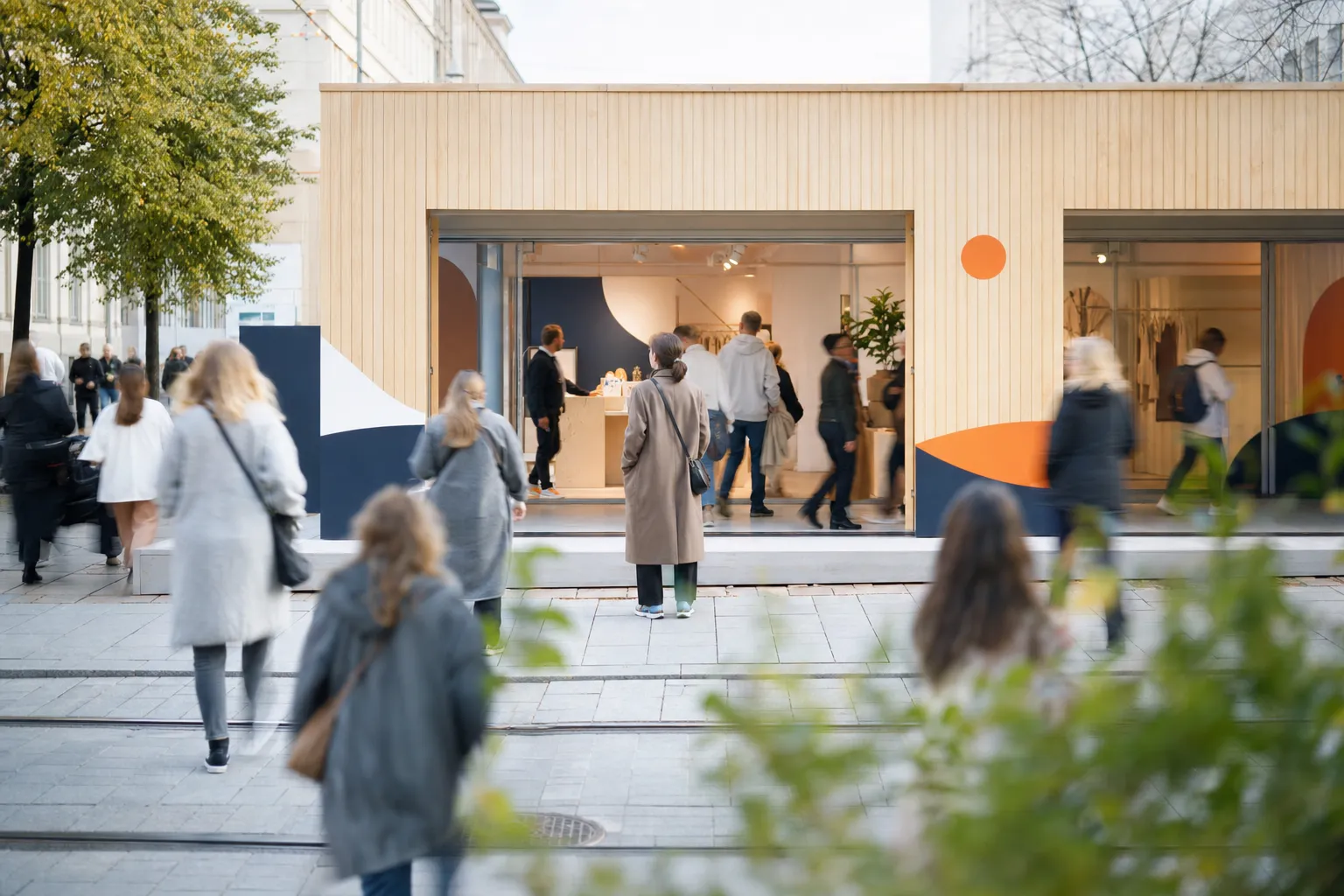
Pop-up shop footfall analytics shows whether the location carried the footfall you hoped for and whether the window and the concept pulled passers-by inside. You read it while the pop-up is still open, so you can decide on evidence whether to extend, repeat or go permanent.
Answers while it's open, measured privacy-first with no personal data.
Trusted by









What you get for your pop-up
-
Answers while it's still open
You get a day-by-day, hour-by-hour trend from day one, so you can adjust the run while there is still time.
-
Did the spot capture the street?
Passers-by and capture rate give the single best read on whether the location and concept worked, and let you compare one pop-up against another or a previous run.
-
No privacy baggage for a temporary space
The method is built privacy-first and approved by a data protection authority, so a temporary space starts with a clean slate.
On this page
Pop-up shop footfall analytics from Bumbee Labs shows how many passers-by a pop-up store pulls inside and how long they stay, day by day, while the store is still open. The counting is done by an anonymous measurement layer over Wi-Fi. Bumbee Labs is the company behind the only footfall method in Europe approved by a data protection authority.
The short version
- Passers-by, visits and capture rate show whether the location carried the footfall and whether the window and the concept pulled people inside.
- The day-by-day and hour-by-hour trend can be read while the pop-up is still open, so the run can still be adjusted.
- Wi-Fi does the counting, anonymously, and it is light and fast to stand up in a space that exists only for weeks.
- A landlord can use the same data for tenant reporting and for placing a unit.
- Below: four questions a brand asks, two a landlord asks, and nine shorter ones.
What does a brand need to know to judge whether its pop-up store paid off?
Did the pop-up pay off, and should we extend, repeat or go permanent?
A pop-up store is judged on its visitor count and on how many passers-by the window and the concept pulled inside, read day by day. Those numbers decide whether the run is extended, repeated or made permanent, and you have them while the store is still trading.
A pop-up is a deliberate, time-boxed experiment: a brand activation, a seasonal shop or a test of a new location or concept before a lease is committed. It is short and costly, so the evidence has to arrive while the decision is still open.
A good concept in a poor location, or the other way round?
A few weeks of sales cannot separate a great concept in a weak location from a weak concept in a great one, and every day on a prime spot costs money. Capture rate reads the pop-up against the footfall of its own street, so a weak window and a quiet street show up as different problems.
Counted the same way each time, one pop-up can also be read against another spot, a benchmark or a previous run. The insight on benchmarking footfall explains why the same method and definitions matter.
Three weeks is short, so can we adjust halfway through?
Yes. Visits to a pop-up store are counted day by day and hour by hour, so you see them build or fade and can adjust staffing, the window or the next campaign moment while the run still has weeks left. The trend reaches you on the dashboard and through the analytics platform & API.
What drew people in: the launch, the influencer or the weekend activation?
In a pop-up store, an opening event, an influencer drop or a weekend activation shows up as a lift in visits and dwell time on those days, which the till does not show. Because the lift is read per day and per hour, you can tell which days, hours and campaign moments worked.
Measure event impact explains how to separate an uplift from what would have happened anyway.
What can a landlord show a pop-up tenant, and where should the unit sit?
What report do we hand the pop-up tenant afterwards?
Where a landlord already measures with Bumbee Labs, a pop-up tenant can be offered a report on visits, capture rate and dwell time for its own run, from the same anonymous data. In tenant reporting the landlord offers the data as a value-added feed, and a contested topic becomes one dashboard that both sides read.
The metric catalogue and delivery formats list what such a report can contain.
Where in the centre should the kiosk or pop-up stand?
A landlord placing a kiosk or pop-up in a centre can compare the visits at each location and the flows between zones. The comparison shows which spots are true anchors and which are dead zones, so the placement has numbers behind it. Retail heatmaps show which stretches of the centre carry the flow.
Which other questions do pop-up brands and landlords ask?
- What is a pop-up space worth per week?Measured visits and capture rate at the unit give a landlord a figure that does not depend on either side’s estimate to set beside the rent; see footfall data for lease negotiations.
- How do we show a brand the traffic before it books?A landlord can put counts in front of the brand before it signs: the passers-by outside the unit, the share who enter and the visits, kept consistently over time.
- How do we staff a short, intense run?Peaks by hour show when people really arrive, so a roster for a few weeks rests on measured arrivals; see staff planning with footfall data.
- Which stop on the pop-up tour worked best?Compare one pop-up with another spot, a benchmark or a previous run, measured the same way each time, and base the next location decision on that.
- Which parts of the space draw people in?Dwell time and zones show which parts of a small space pull visitors in and which get ignored.
- Was it the weather or the concept?A rainy weekend in the middle of a short run is read with weather and holidays alongside the footfall, so one wet weekend is not judged as a weak concept; see weather and footfall.
- Should we repeat the outlet or clearance format?An outlet or clearance sale on a temporary floor is measured the same way as the permanent stores and used to decide what to keep; see clothing stores.
- What do we tell the marketing manager or the agency about the activation?Give them the visits, the dwell time and the lift in traffic that the activation produced.
- Does the street carry enough before we sign?Flows at district level show whether the area carries the visitors a pop-up needs, and a time-boxed pop-up then tests the spot itself; see site selection.
What data does a pop-up shop get from footfall analytics?
A pop-up shop gets the street audience the spot carries, the visitors who step inside and the capture rate, a trend by day and hour, dwell time per part of the space, the lift from campaigns and events, a comparison with another spot or a previous run, and peaks for staffing.
Is Wi-Fi counting fast enough for a space that lives for weeks?
Bumbee Labs adds an anonymous measurement layer over Wi-Fi that is light and fast to stand up in a space that exists only for weeks. There is little to install, often just an access point or two. You can read passers-by, entrants, movement and dwell while the pop-up is still open. See Wi-Fi people counting for how the method works.
How is the conversion funnel read over a short pop-up run?
Whether a spot and a concept captured the street is a conversion-funnel question (passers-by, then entry, then stay), read over a short window. A large Scandinavian retailer acted on that funnel and the dwell data behind it across its stores with Bumbee Labs, as told in Retail Chain Runs One Playbook. A pop-up applies the same measurement to a time-boxed bet, fast enough to decide whether to extend or repeat before the doors close. In-store conversion rate lays out how each step of the funnel is measured and acted on, and retail chains shows the same funnel across a whole chain.
Where does a pop-up store fit next to a flagship, a retail park or a shopping centre?
A pop-up is a temporary test; a permanent statement store is a flagship store, measured in depth over time. If your pop-up sits inside a shopping centre or a retail park, the venue’s own footfall and tenant mix are covered on retail destinations and mall operators & property owners.
Curious what this looks like for your venue?

Approved and validated
A data protection authority's approval applies just as much to a store that is open for three weeks. The measurement is anonymous and uses no personal data at any point.
At Ray our motto is customer success, and we are excited about our partnership with Bumbee Labs. Complimenting the seamless Wireless provided by Ray, our customers will now be able to leverage the deep analytics provided by Bumbee Labs and take informed business decisions to aid their growth.
Frequently asked questions
Is pop-up shop footfall analytics quick enough to set up for a short-lived space?
Yes. Wi-Fi-based measurement suits a space with a short life: installation is light, and the first day's data is in the dashboard the next morning.
Can pop-up store footfall analytics tell a good concept from a good location?
Yes. Capture rate reads the concept against the street the pop-up sits on, so a busy street cannot make a weak concept look good and a quiet street cannot make a strong one look bad.
Will pop-up store footfall analytics tell us in time to extend or repeat?
Yes. Because the trend is visible mid-run, you can decide whether to extend, repeat or go permanent while the store is still trading.
Where this fits
Part of
In this section
Challenges
Metrics
Platform and integrations
Data protection:GDPR-compliant footfall analyticsThe IMY decisionGDPR CCTV