
What footfall data you can get
Bumbee Labs delivers footfall data covering visitor counts, dwell time, paths between zones, peaks and trends, passers-by, capture rate and occupancy. Which metrics you get depends on the method: Wi-Fi, 3D sensors, cellular or a hybrid. The data arrives as anonymous, aggregated statistics in a dashboard, through an open API or as scheduled exports.
Approved by a data protection authority, no personal data.
Trusted by









Four things to know about our data
-
More than visitor counting
Counts, dwell, paths, zones, conversion, occupancy and trends: the full picture of how a space actually gets used.
-
A privacy-first method
No individuals are identified. All personal data is irrevocably deleted, so only anonymous, aggregated statistics remain.
-
Delivered your way
Choose from a dashboard, an open API into your own BI, scheduled exports and reports, or crowd alerts in near real time.
-
Validated figures
The figures rest on a passive statistical sample, heavy error filtering and manual control measurements. The method is validated by academia, partners and customers.
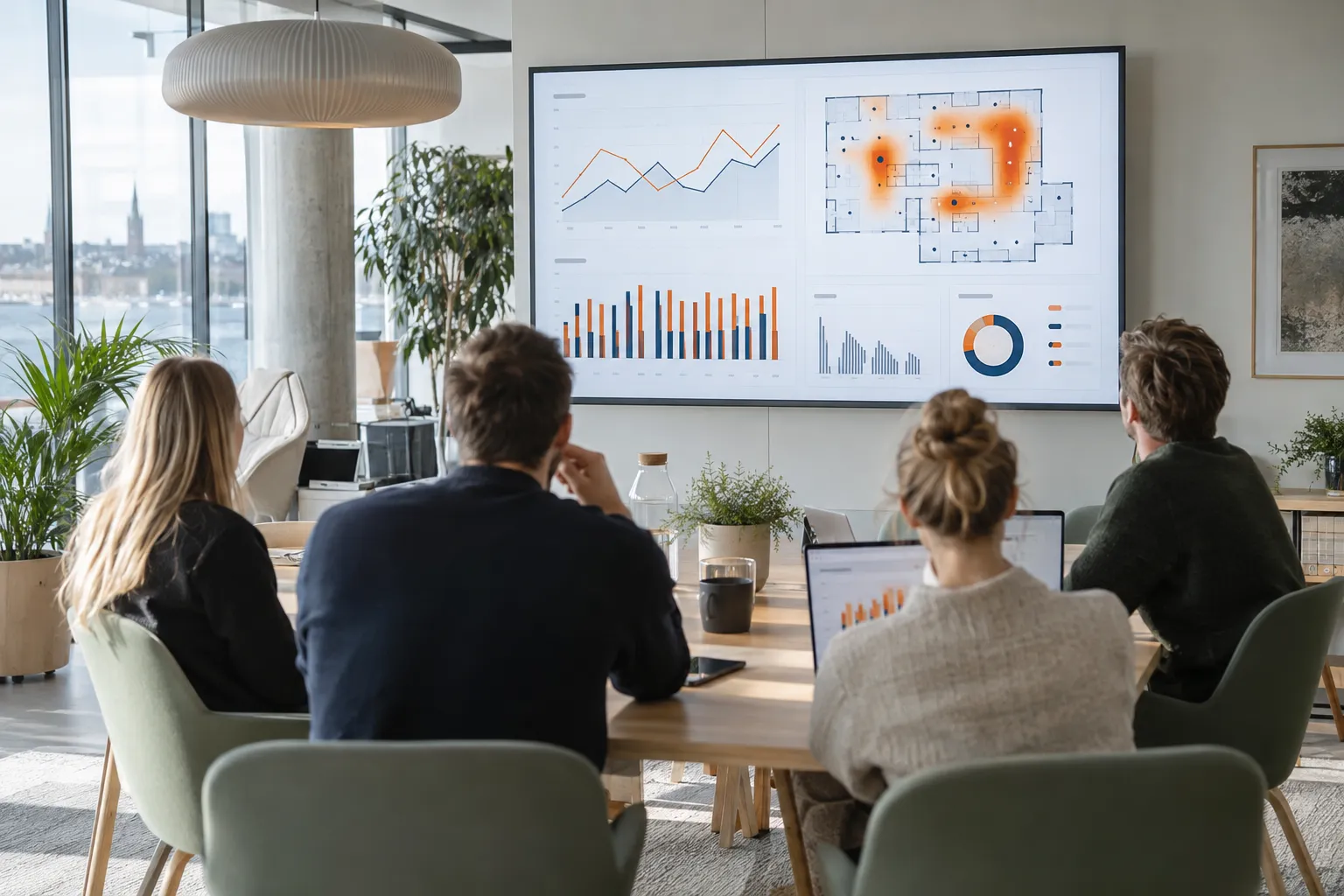
What questions can footfall data answer?
Footfall data answers the questions that follow a headline count, in visitor statistics your whole organisation can act on. It shows how long people stayed, where they went, which zones pull traffic, how your capture rate develops, when it gets busiest, and how all of that moves with the weather, your campaigns and the calendar.
The short version
- Bumbee Labs delivers visitor counts, dwell time, paths between zones, peaks and trends, passers-by, capture rate and occupancy.
- Not every method delivers every metric. Wi-Fi, 3D sensors, cellular, LiDAR and hybrid setups cover different ones, and the comparison below shows which.
- The data reaches you in the Explore portal, through an open API, as scheduled exports and reports, or as Crowd Alerts.
- Standard metrics are ready the day after the visit. Crowd Alert works in near real time.
- Only anonymous, aggregated statistics remain after personal data is irrevocably deleted.
You can measure with Wi-Fi, 3D sensors, cellular or a hybrid of all three. The foot traffic data lands in one place, and the same metrics become comparable across days, sites and seasons. If the dwell metric is new to you, dwell time explained covers what it means and how to read it.
The metric catalogue
Bumbee Labs can deliver every metric below, but not every method delivers every metric. The right method, or combination of methods, depends on what you need to know, and the comparison further down shows which method delivers which.
Counting & volume
- Visitor count (total) how many visitors came over any period you choose. This is the headline number.
- In / out counts directional counts across a line: exactly how many entered versus left a door or gate. Native to cameras & 3D sensors
- Unique visitors distinct visitors rather than visits, separating one returning person from many different people.
- Passers-by how many people passed outside without entering: the audience still in reach.
- Capture rate the share of passers-by who came in.
Behaviour & movement
- Dwell time how long visitors stay, per zone or overall. It is the clearest signal of engagement and of queue pain.
- Visitor paths & flows the routes visitors take between zones and sites: first stop, next stop, last stop.
- Zone data & correlation activity per zone and how zones relate, including hot and cold areas.
- Anchor positions the zones that pull and hold the most traffic: your natural anchors for tenant mix and layout.
- Segments / visitor classes groups defined by behaviour: short versus long dwell, staff versus visitor, passer versus entrant.
Timing, capacity & safety
- Peaks & lows (trends) when you are busiest and quietest by hour, day, week and season: the basis for staffing and planning.
- Queue time queue length and waiting time per lane or service point, read by hour, day and season.
- Throughput how many people pass through a lane or gate per hour, counted in and out, so one lane can be compared with the next. Strongest with 3D sensors / LiDAR
- Occupancy / capacity (real-time) how full a space is right now against its safe limit. Strongest with cameras / 3D sensors
- Crowd alerts a near-real-time trigger when a zone gets busier than a level you set, via the Crowd Alert add-on.
Context & comparison
- Origin / catchment where visitors travel from: the geographic draw of a site or area. Native to cellular
- Travel patterns between sites movement between separate locations, e.g. station to high street.
- Benchmarking like-for-like comparison across sites, periods and campaigns, normalised so the numbers line up.
- External-factor correlation footfall set against weather, sales/POS, campaigns and events to show cause and effect.
Which method delivers which metric?
Each method is strongest at its own metrics. Cameras, 3D sensors and LiDAR give exact in/out counts and live occupancy. Wi-Fi shows movement patterns across the whole space, cellular maps catchment over wide areas and a hybrid combines them. We choose the method by the question you need answered.
| Capability | Camera & 3D | LiDAR | Wi-Fi | Cellular | Hybrid |
|---|---|---|---|---|---|
| Exact in / out at a door | Yes | Yes | Partial | No | Yes |
| Live occupancy | Yes | Yes | Partial | No | Yes |
| Dwell time & paths | Partial | Partial | Yes | Partial | Yes |
| Capture rate | Partial | Partial | Yes | No | Yes |
| Whole-space coverage | Partial | Partial | Yes | Partial | Yes |
| Wide-area catchment & origin | No | No | No | Yes | Yes |
- Full
- Partial
- Not available
How does the data reach you?
Bumbee Labs is dashboard-agnostic and flexible about delivery. Everything runs through the API, and you decide how to use it.
-
The Explore portal
Your data as business intelligence: KPI monitoring, conversion funnels, area flow and dwell on your own floor plan. Views are tailored per stakeholder, and because the platform is dashboard-agnostic, we can build into your BI or suggest one.
-
The API
All delivery runs through the open, documented Bumbee Labs API, available around the clock. Pull every metric from every installation straight into the stack you already run.
-
Exports & reports
Scheduled and on-demand exports and reports for stakeholders who want numbers in their inbox, comparable period-on-period and site-on-site.
-
Crowd Alerts in near real time
An add-on that fires an SMS, email or dashboard alert when a zone crosses a threshold you set, for office floors, food courts, beaches and airport queues.
The data journey
-
Collection
Visitors' phones look for networks and emit signals as they move through a space. Bumbee Labs measures these signals passively, so the visitor needs no app or login and does not have to do anything. (Cameras and 3D sensors count optically at the point; cellular uses anonymised, aggregated network data.)
- Personal data deleted, not stored
Anonymisation
All personal data is irrevocably deleted and never stored, not even in hashed form. Only anonymous statistics remain, so no individual can be identified.
-
Filtering
A heavy AI filtering stage removes the noise that would distort a count (randomised identifiers, spoofing, stationary devices, blacklisted vendors and staff-like behaviour), leaving a clean statistical sample.
-
Processing
The statistical engine extrapolates from complete visits to a robust estimate of the real population, fills gaps in paths, and calibrates against manual control measurements. The model keeps learning.
-
Insight
Aggregated, anonymous metrics are delivered through the API and presented in your dashboards, exports and alerts. Standard metrics are ready the day after the visit, and crowd levels in near real time come through the Crowd Alert add-on.

Approved and validated
Bumbee Labs is the company behind the only footfall method in Europe approved by a data protection authority. No personal data is ever produced.
How is footfall data measured, and how accurate is it?
Bumbee Labs estimates visitor flows statistically. It starts from a passive sample, filters out errors, measures the drop-out and extrapolates the result to the true population. Each deployment is tuned to the space and calibrated against manual control counts. People counting accuracy shows how the figures are verified.
- A passive, representative sample. Not everyone carries a phone or has Wi-Fi on, so no method captures every single person. The model extrapolates from this selection base: the large majority of visitors carry an internet-capable device, and a large share of those have Wi-Fi enabled.
- Error filtering. Wireless printers and other stationary devices, identifier randomisation and spoofing, and temporary signal-strength errors are all filtered out before the count is formed.
- Path completion. Devices probe at different rates, so some sensors miss some devices. Incomplete visits are extrapolated and gaps in paths are filled against routes defined as valid, so a single missed read doesn’t break a journey.
- Manual control measurements. Bumbee Labs always runs manual control counts and matches them to its own data. The control counts become part of the training data and keep the extrapolation in check. Independent control measurements (for example with Sweco) have shown the extrapolation factors hold consistently.
- Independently validated. The method is validated by academia, partners and end customers. It has been applied across travel centres and entire city centres over many years, with active research conducted on the data.
How do different sectors use footfall data?
Different sectors make different decisions with the same metrics: staffing, campaign proof and rent in retail and malls; anchor points, property value and safety in cities; hub flows in transport; contacts and dwell in outdoor advertising; and occupancy at airports, museums and parks.
- Retailers & malls: staff to the peaks, prove campaign impact, set visitor-based rent, read space utilisation from hot and cold zones. Retail chains · Petrol & convenience · Malls & shopping centres
- Cities: anchor points, property value, safety and bottleneck management across a whole centre. City centres & smart cities
- Transport: flow through hubs. Transport hubs
- Advertising (DOOH): total contacts, dwell and segments around each surface. Outdoor / DOOH
- Airports, museums, parks: queues, occupancy, exhibit and ride popularity. Airports · Museums · Amusement parks
For the in-store view, where hot and cold zones, paths and dwell come together on one floor plan, see retail heatmaps.
At Ray our motto is customer success, and we are excited about our partnership with Bumbee Labs. Complimenting the seamless Wireless provided by Ray, our customers will now be able to leverage the deep analytics provided by Bumbee Labs and take informed business decisions to aid their growth.
Frequently asked questions
What can Bumbee Labs footfall data tell me?
Across methods, Bumbee Labs can deliver visitor counts, unique visitors, dwell time, movement paths between zones and sites, zone activity and correlation, anchor positions, peaks and trends, passers-by and capture rate, occupancy, and crowd alerts. Which metrics apply depends on the method and the installation. See the metric catalogue above.
How do I receive the data?
Everything runs through the Bumbee Labs API, and you choose how to use it. Read the figures in the Explore portal, feed the API into your own BI tool, have exports and reports sent on a schedule, or add the Crowd Alert add-on for threshold warnings. Because the platform is dashboard-agnostic, you are not tied to one dashboard.
Is the data personal data?
No. The method is built so that nobody can be identified. Personal data is irrevocably deleted, so only aggregated statistics remain. A European data protection authority reviewed and approved this approach.
How accurate is Bumbee Labs footfall data?
Accuracy is high, and it varies with the method, the venue and the calibration of the installation. We verify it by matching manual control measurements against our own data. Each deployment is tuned to the space, and methods can be combined where higher precision is needed.
How fresh is footfall data from Bumbee Labs?
Standard metrics arrive the day after the visit. Within a single day, recurring visits can be measured too. Occupancy and threshold alerts come through the Crowd Alert add-on, which works in near real time.