
Price space on visits, not just sales
As shopping moves online, physical space increasingly earns its keep as a showroom and a meeting place. To value it fairly (for rents, tenants and screens) you need hard data on who passes, who enters and how long they stay.
Footfall-based rents and tenant insight, privacy-first.
Trusted by









Why mall operators choose Bumbee Labs
-
Fairer rents, better mix
Set footfall-based terms, place each tenant where the traffic suits them, and back it all with numbers both sides accept.
-
Monetise screens and events
Reach, impressions and exposure-minutes justify ad rates, while flow and cross-shopping data reveal true anchors, false anchors and dead zones.
-
Privacy-first across the centre
Anonymous by design and approved by a data protection authority, across every entrance, floor and food court.
The job to be done
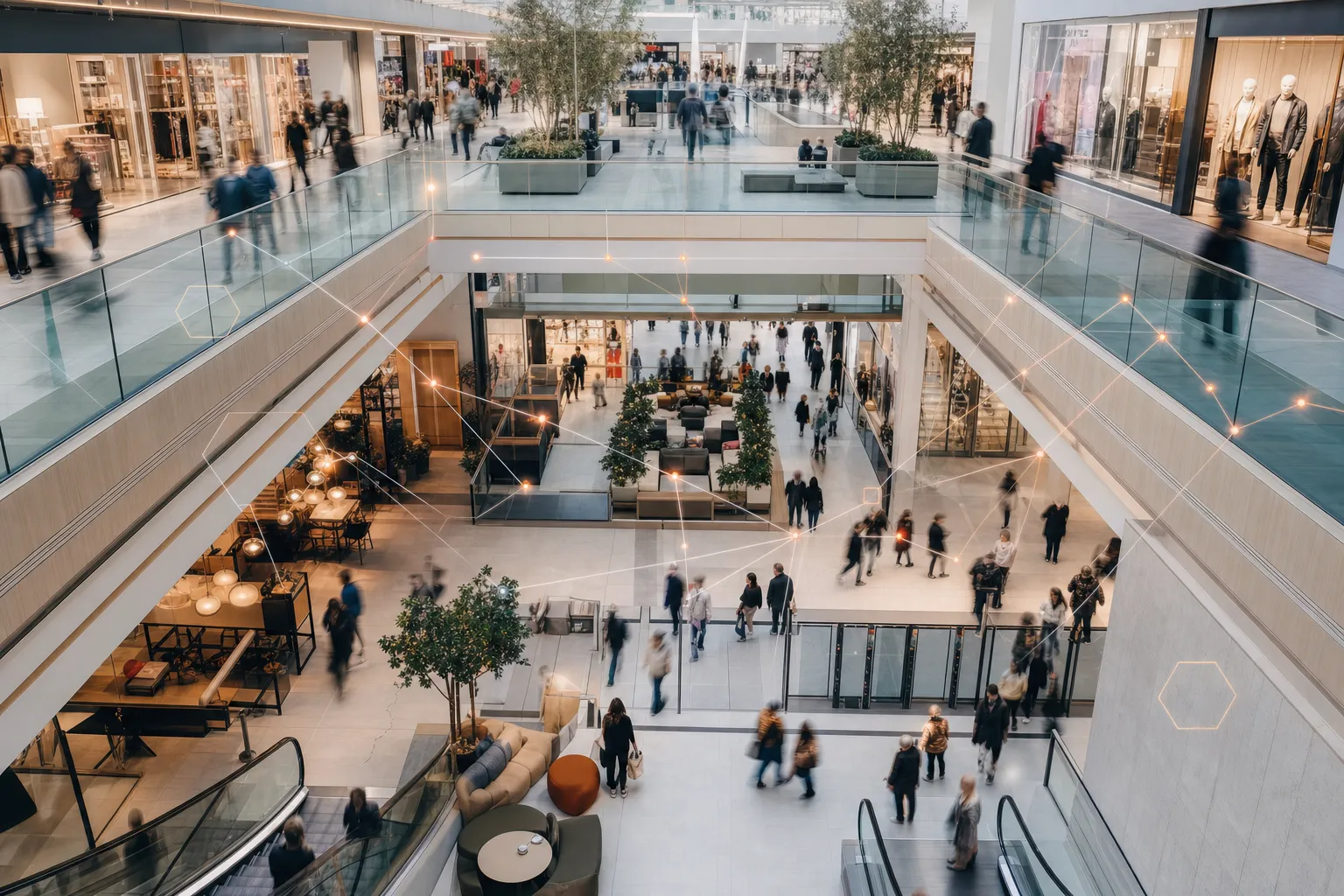
A shopping centre answers to many parties at once: owners, operators, on-site managers and dozens of tenants, each needing different intelligence. The recurring questions: What’s the right tenant mix, and where should each tenant sit? Which locations are true anchors, and which are “false anchors” or dead zones? How do I move rents from sales-based to footfall-based? How do I maximise revenue from screens, billboards and events? How do I plan maintenance, cleaning and logistics around real visitor patterns, and manage the risk of crowding?
How shopping centre footfall measurement works
Bumbee Labs measures footfall across the whole centre (main hallways, food court, entrances, individual locations and clusters), mostly on Wi-Fi infrastructure the centre already has; where coverage is thin, a few additions fill the gaps. Each stakeholder gets the view that matters to them: a portfolio overview for ownership, location dashboards for managers, a value-added intelligence feed for tenants. All of it anonymous by design, using the only footfall method in Europe approved by a data protection authority.
How Wi-Fi people counting works →
What data you get
- Visitor counts for the whole centre, sectors, clusters and individual locations.
- The conversion funnel per location: passers-by → enter → stay → (with POS) buy.
- Dwell time by area, and zone correlation / cross-shopping: where people go next, which anchors pull traffic to neighbours.
- Flow and path analysis: a richer, more actionable version of heatmaps.
- Reach and impressions for screens: unique exposures and exposure-minutes that justify ad rates.
- Peaks, trends and real-time crowding: for staffing, maintenance scheduling and safety.
This is the data that lets you move rent discussions from “your sales were down” to “here is the footfall and the value of your location”, and to offer footfall analytics to tenants as a value-added service.
Turnover rent and footfall-based leases
Turnover rent links a tenant’s rent directly to their trading performance, and, increasingly, to the footfall their unit receives and generates. Bumbee Labs gives both landlord and tenant a single, trusted visitor-statistics feed so turnover-rent negotiations rest on measured evidence rather than disputed sales reports. How that evidence is used at the negotiating table is covered in footfall data for lease negotiations.
→ See the complete metric catalogue
Proof: a flagship Stockholm shopping mall
One of Sweden’s busiest shopping areas (a large multi-level mall of shops and restaurants in central Stockholm, with extremely high footfall and many entrances) had tried other footfall technologies and wasn’t satisfied with the accuracy or usefulness. Camera and sensor systems struggled with the size, the many entries/exits, and visitors leaving and returning during a single trip. (For Bumbee Labs, the size was an advantage: the statistical method gains accuracy as visitor numbers grow.) Working with Bumbee Labs for years, the mall used the data to:
- Move from sales-based to footfall-based rents: fairer terms as stores increasingly act as showrooms while sales happen online.
- Price screens and event spaces on real exposure, including differentiated rates by day and time, and give event renters fact-based reports on impact.
- Identify anchors, false anchors and dead zones, and manage bottlenecks and crowding.
- Schedule maintenance and deliveries to disrupt visitors least.
The cooperation was successful enough that the operator rolled Bumbee Labs out across its other malls.
Where this fits
Screens and billboards are a revenue line of their own (see outdoor & DOOH advertising analytics). For the surrounding catchment and how people arrive, see city-centre & smart-city analytics.
We are very happy to announce this partnership with Bumbee Labs to boost our Wireless solutions portfolio and bring what we believe is the future for retail businesses, measured by trustful data. What can't be measured, can't be improved.
Frequently asked questions
Can we base rents on footfall rather than sales?
Yes, that is a core use. The conversion funnel and visit counts per location let you set footfall-based terms and offer tenants the data as a value-added service.
We have many entrances and very high footfall, will accuracy hold up?
Yes. The method is statistical, so very high visitor numbers actually sharpen accuracy, and visitors who leave and return during one trip are handled correctly.
Can different stakeholders each get their own view?
Yes. Same data, three views: the owner sees the whole portfolio, centre management works from location dashboards, and tenants can be offered their own intelligence feed.

Compliant where it counts
Approved by a data protection authority. Validated by academia, partners and customers. The whole centre measured, and not one shopper identified.